When I was a child, I regularly went to the cemetery with my parents to visit and tend to the graves of my father’s Latvian parents. In general, it was something I liked doing, although I do remember the one time I was distinctly unhappy about going. I’d been glued to the telly, entranced by a retelling of ‘Cinderella’ (I later discovered the film was The Slipper and the Rose) and when my father insisted I turn off the TV and get into the car, I was utterly miserable. I loved fairy tales, and ‘Cinderella’ was my favourite. Although I was sure I knew how the film was going to end, I was devastated about missing its heartwarming conclusion.
(As an aside, I rewatched the film as an adult and wasn’t all that impressed by it, but I can understand why my younger self had been so taken with its technicoloured dreaminess and its handsome prince, Richard Chamberlain.)
Sadly, my dad joined his parents in the cemetery not too long afterwards – I was fifteen when he died – so I can’t help but wish I could’ve acted in a more mature way, but such is the wisdom of hindsight.
Back to the cemetery. After we’d said a prayer beside my grandparents’ headstones, we’d get to work on weeding and tidying the plants on the graves. One of my jobs was to water the plants, so I would back and forth from the graves to the freestanding tap to refill the watering can. Beside the tap was a large wire mesh bin which was nearly always half-full of wilting bouquets and cut flowers. Yet some of the flowers were still perfectly fine, and I hated the idea of those pretty flowers just sitting there, rotting away. So I’d pull them out of the bin and make a little floral arrangement on top of the small wooden roof of the standpipe while I waited for the watering can to fill. It made the cemetery that bit brighter, and the task made me oddly happy.
Many years later, I happened across a documentary about a formal movement known as Land Art that emerged in the 1960s and 70s, and something about those artworks spoke to me. Could my floral arrangements in the cemetery have been termed land art?
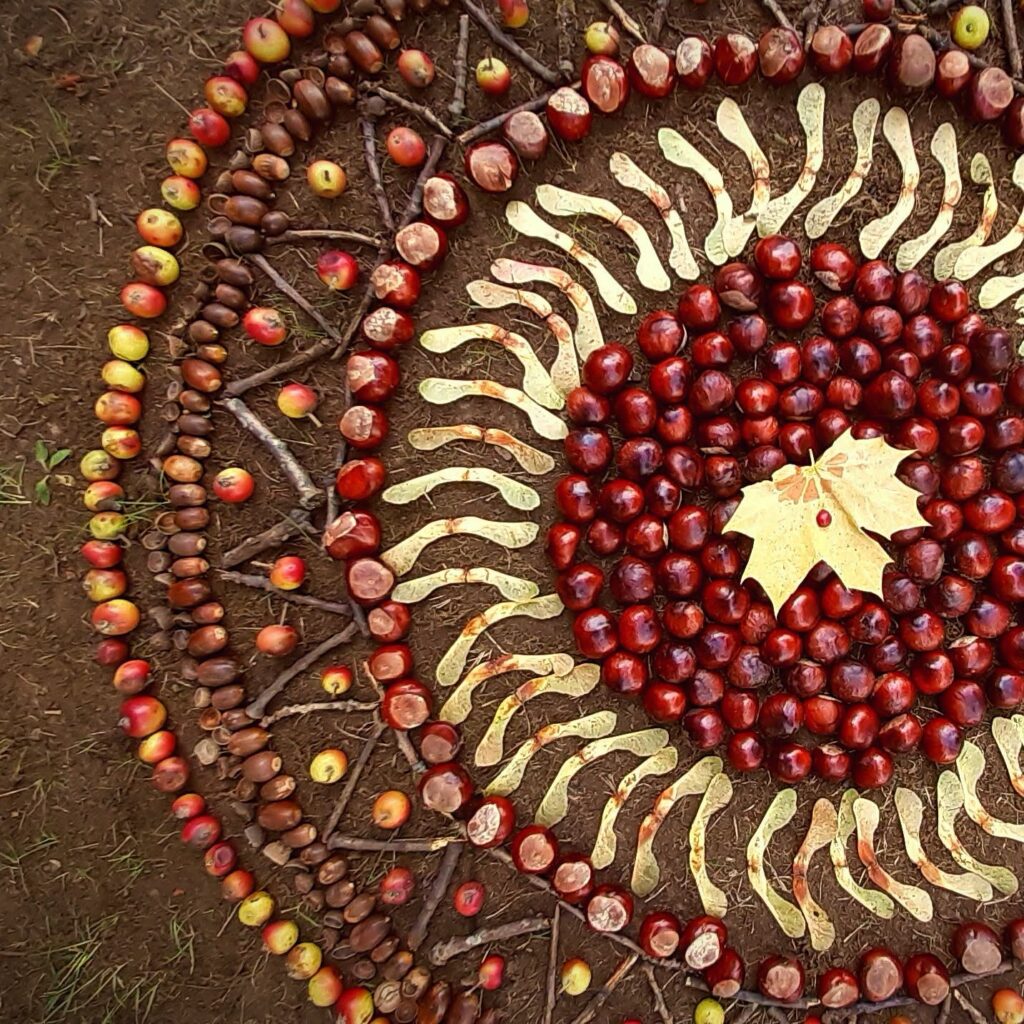
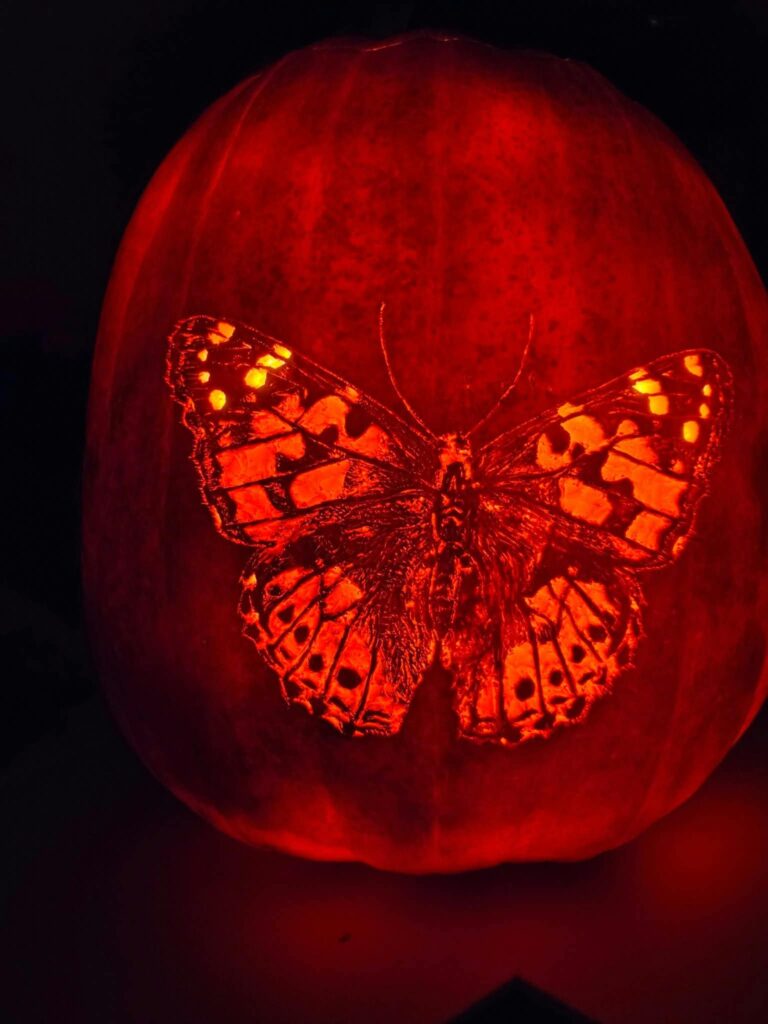
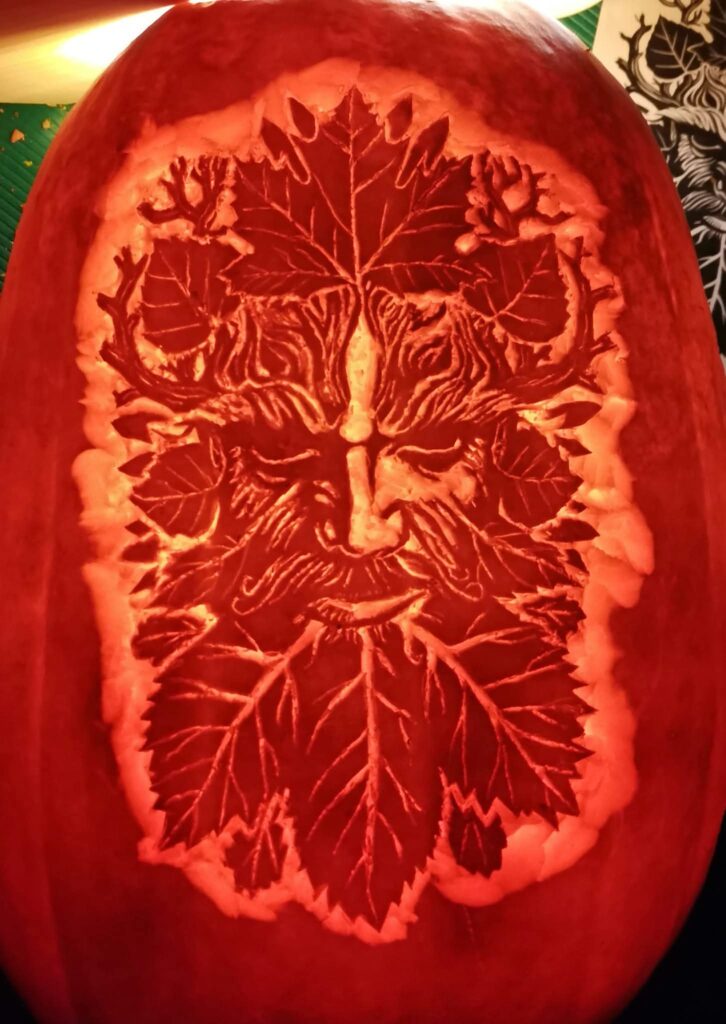
Much later still… when Facebook had become a thing and I’d made friends with lots of creative people, I discovered the land art of Winston Plowes and the exquisitely carved pumpkins of Ian Dodd and, again, their works of art resonated with me.
Recently, Winston’s land art was the subject of a short film, and I love the way he describes his art as being transient. I think that’s the best way to describe what I was doing with those flowers. I was creating something pretty for the sheer joy of it, knowing that what I’d made would soon be gone. There’s something profound about the impermanence of that kind of creativity; the importance of letting go. Yet the memory, the sense of contentedness, remains.
I rather like the idea of the imagination as a kind of compost bin where striking images, conversations and events get dumped – seemingly gone forever – and then break down over time to create a fine soil where fresh seeds take root and grow into wonderful new pieces of art, stories, songs…
I’d long wanted to reimagine the story of ‘The Princess and the Pea’ since I’d always empathised with the princess. I never really thought of her as a fussy, spoilt brat. Rather, she was a highly sensitive person, able to sense the slightest bump in a tall stack of mattresses. Taking this further… what if this sensitivity was a kind of super or magical power. What then? What if this gave her the ability to sense all kinds of things buried in the soil…?
When an image of a young (or was she an old?) woman who had this great sensitivity popped into my head, I knew I had the beginnings of my story. But I wanted to see my Soil Witch through the eyes of someone else. He’d be an artist and a gardener. A man in love with nature. But what kind of art would he create? That’s the moment everything clicked. He’d be a land artist, of course! Thus came about one of my favourite recent male characters – Percy.
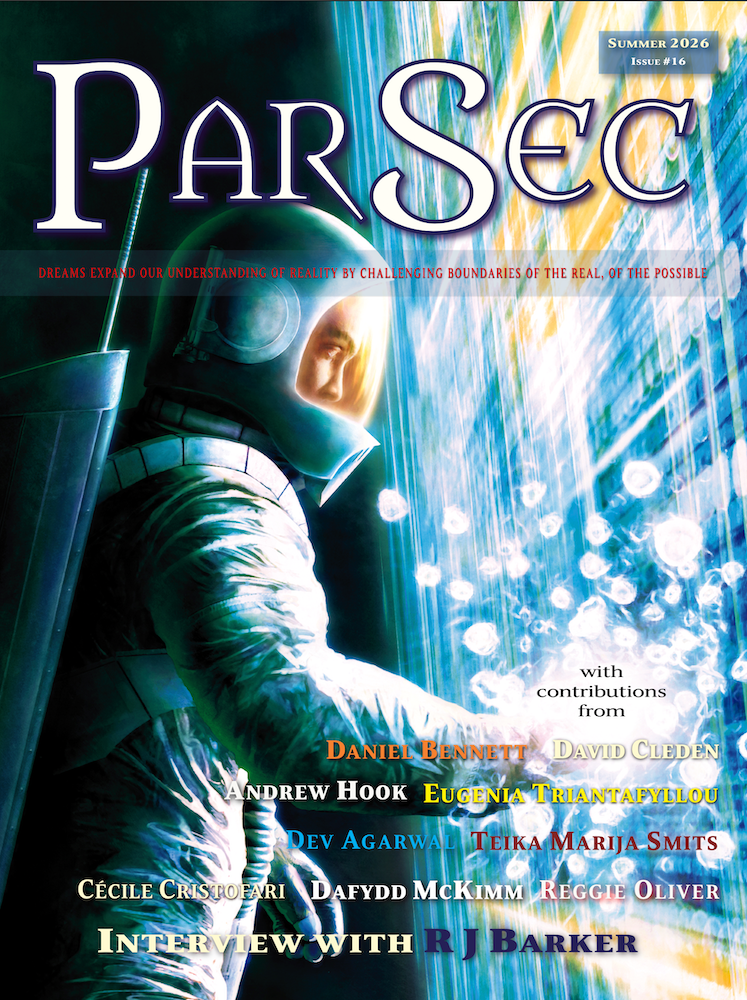
I’d like to thank Winston Plowes and Ian Dodd for the images of their art that kept popping up in my Facebook feed, which I know must’ve, compost-like, helped to inspire my story which I entitled ‘Soil Witch, or, The Princess and the Pea’. And, of course, I’d like to give huge thanks to Ian Whates, the editor of ParSec, who included my story in issue #16. If you’d like to read what Ian describes as an “off-kilter love story” please do pick up a copy of ParSec. There are many great stories within (I haven’t read them all as yet but so far I’ve particularly liked Andrew Hook’s ‘Nether’ and Cécile Cristofari’s ‘Daughters of Unknown Mothers’) as well as reviews, an interview and more.
A last thought… if you’re an artist or writer, I know it may feel as though sometimes you’re sending out your precious pieces of creativity to an uncaring and unresponsive world. But you’re not. Sometimes you’re unwittingly inspiring people to create: to paint or write stories or sing songs. Which has to be one of the most generous gifts a person can give.